Isla Holbox
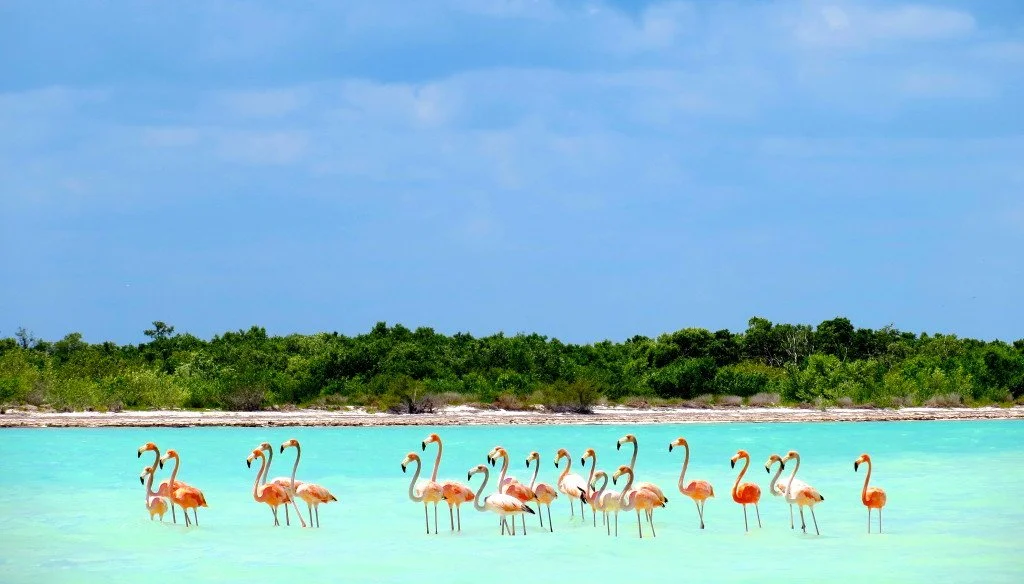
A tiny strip of land in the Yucatan area of Mexico is making a splash for 2016. Long a place that folks went to swim with giant nurse sharks in certain months is becoming an off the radar new Tulum type of destination for sun seekers and going off the grid. See more in the article below.Isla Holbox: The Mexican Hideaway Hidden No MoreBuffeted by waves of visitors, the languid beach community faces a tourist tipping pointBy David Wallis • 05/07/16 5:17pmISLA HOLBOX, MEXICO—The original owner of Villas Flamingos in Isla Holbox, Mexico namedhis beachfront hotel after the iconic neon pink birds that longcongregated in front of the property. But in recent years theflamingos have apparently flown the coop. According to Carlos Grauches, thegeneral manager of the recently expanded resort, the flamingosapparently found the tumult from a tourist influx in the areadisquieting and have moved to a yet undeveloped stretch of the island.Isla Holbox (pronounced “holl-bosch”), about a two-and-a-half-hourjourney from Cancun by car and ferry, is at a tourism tipping point,and the flamingos symbolize significant changes to the localenvironment. Many people, tourists and locals alike, compare Holbox(population 1800) to Tulum before it turned into Brooklyn South 20 orso years ago. Today, many publications hail Holbox as the next Yucatanhotspot; Conde Nast Traveler dubbed it “electric island” (the reporter musthave missed the regular brownouts), The New York Times just named it one ofthe “52 Places to Go in 2016,” and Vogue gave it an approving air kissin the form of a long photo essay chronicling a trip by fashion designersIrene Neuwirth and Albertus Swanepoel and their swish pals to the “artistically mindedbohemian hideaway.”For now, the pace of the island remains languid, a chicMexican Mayberry.The completion of a new highway from Cancun about two years agosignificantly cut travel time to the island, attracting flocks of newvisitors; last Christmas almost all of the roughly 500 rooms on theisland were booked. A developer has bought up a swath of land awayfrom the main village and there’s talk (and fears) of a mega-hotel, agolf course and even a bridge to Cancun. The developer, which has beenaccused by many locals of using underhanded tactics to secure theproperty from local landowners, tweeted that “Our intent is not toconvert #Holbox [into] a spa, or a racetrack and much less a Cancun.”Few here believe that promise. “The biggest fear is the loss ofcontrol of keeping the bad guys out,” said Chendo, who owns aleftist-theme restaurant Viva Zapata!, replete with a mural depictingarmed guerrillas taking it to the man. “Holbox is a very safe place whereeveryone looks out for their neighbors.”Mr. Grauches, the hotel manager who hails from Majorca, viewsincreased development as a fait accompli, but he also acknowledged, “morepeople, more problems.”The streets of Isla Holbox.The streets of Isla Holbox. Photo David WallisFor now, though, the pace of the island remains languid, a chicMexican Mayberry. According to José Martí: A Revolutionary Life, inthe late 19th Century the Cuban writer and revolutionary visitedHolbox, which he described as a tiny fishing village “frequented bycayucos and smaller canoes, which trade in turtles and cazones[dogfish].” Fishing remains a livelihood for many locals. Brightlypainted skiffs, most about 16 feet long, stand out against thewhite-sand beaches. Rolls of nets are strewn about. Some salvagedrowboats double as beach beds at several resorts.Juan Karateka, proprietor of a local sightseeing operation and ownerof his the red, green, yellow striped boat La Piola, noted that localsonce kibitzed about fishing—“How big was that fish? How many did youcatch?” Now money is a more common topic of conversation.There are practically no cars traveling the sand-packed streets, whichcan turn into lagoons after a fierce tropical rain. Instead, peoplestroll in the shallow Gulf of Mexico or ride golf carts, ATVs andbicycles. Drivers, including tweens at the wheel next to their beamingparents, routinely ignore the handful of stop signs. That’s acceptablebehavior, as Matthias, an expat German who rents bicycles, explained;in Mexico only traffic cops are authorized to stop drivers and Holboxhas no traffic cops (The town padres I was told have installed wooden posts atthe entry to one of the island’s main piers to prevent drunk driversfrom parking golf carts in the drink).The few thick-armed cops on the island hanging out by Holbox’s centralsquare are friendly and seem happily underworked. After a free dancerecital ends in the public amphitheater across from the whitewashedCatholic church, the cops double as roadies, stacking red plasticchairs. On Christmas Eve, sirens blare at about nine at night, becausethe police pickup truck serves as Santa’s sleigh. Papá Noel throwscandies at a gaggle of children who trail the vehicle as it crawlsaround the square. After two loops, Santa waddles up the stage and handsout presents—plenty of dolls and bikes with ribbons on thehandlebars—in a communal gift-giving ceremony.Community matters in Holbox. As Noa Watson, a Californian married toChendo, told me, she plans to live on the island until her “dyingday.” Yet she knows she will never be truly a holboxeña. Islanders,she pointed out, take care of one another: “No one would ever gohungry here, as there is always a fish on the grill and always aninvitation to eat.” On the flip side, the community can drum outundesirables. “There are unwritten laws,” Ms. Watson explained. “Ihave seen a handful of people been literally voted off the island forbad behavior: one screaming at an elderly woman, another walkingaround topless.”The demands of discerning tourists, the Vogue readers, can spurmisunderstandings. Breakfast, for instance, at a local café can takeforever, because the restaurant’s owner expedites orders one at a time butwon’t offer waiting guests a cup of coffee, which would deviate fromher rigid system. Ms. Watson just patronized a restaurant on New YearsDay “and the clientele was irate,” she reported. “Culturally on NewYears Day, people continue the party, so half the employees were not there(those who were there had not slept). Random family members swarmed the kitchen trying to get service out but there were just too many people to serve. The clients were not happy to wait—under a beautiful sky—in front of a wonderful beach. It was painful to see.”The pier at Isla Holbox.The pier at Isla Holbox. WikimediaMs. Watson hopes Holbox will grow organically and tourists will blendin rather than fray the societal fabric. Many festivals, boisterousfishing tournaments, and quinceañera ceremonies for 15-year-old girls,she noted, purposefully disturb the peace. “No one really cares if theloud music keeps up the tourists all night (THANK G-D),” she wrote byemail. “Of course,” she points out, “if any tourist wants to partake,they are more than welcome and are invited for food and drink—noproblem.”Ms. Watson, who owns a jewel box of a jewelry shop, added that whatsets Holbox apart from other Mexican resorts is that locals retainownership of nearly every business. “So whereas with Playa del Carmenand Tulum, the tourists are completely separated from the locals andthe community,” she said, “here in Holbox it is all one. It’s nice tobe able to always have the locals on the beach and in the shops totalk to. My husband says that Holbox has ‘alma’ (soul), whereas otherbeach communities have been stripped of theirs.”